
Heat Pump Repair in the USA
Cupe Mechanical HVAC sends technicians to Heat Pump Repair calls across the USA. Heat pumps move heat through a reversing valve that switches between heating and cooling modes. Low refrigerant, a stuck valve, or a failed defrost board stops the cycle and drops capacity. Our crews measure suction and discharge pressures, check superheat and subcooling, and confirm outdoor coil airflow before any component change.
Defrost sensor failure leaves frost on the outdoor coil and trips the high-pressure switch. A thermistor reading outside the expected range points to the sensor or the board. Technicians replace the sensor, verify the board output, and confirm the reversing valve shifts when the control calls for mode change. Each step restores the heat pump to its design operating envelope. Piping leaks in condensate drains require attention as part of heat pump repair offered through Cupe Mechanical HVAC across the USA.
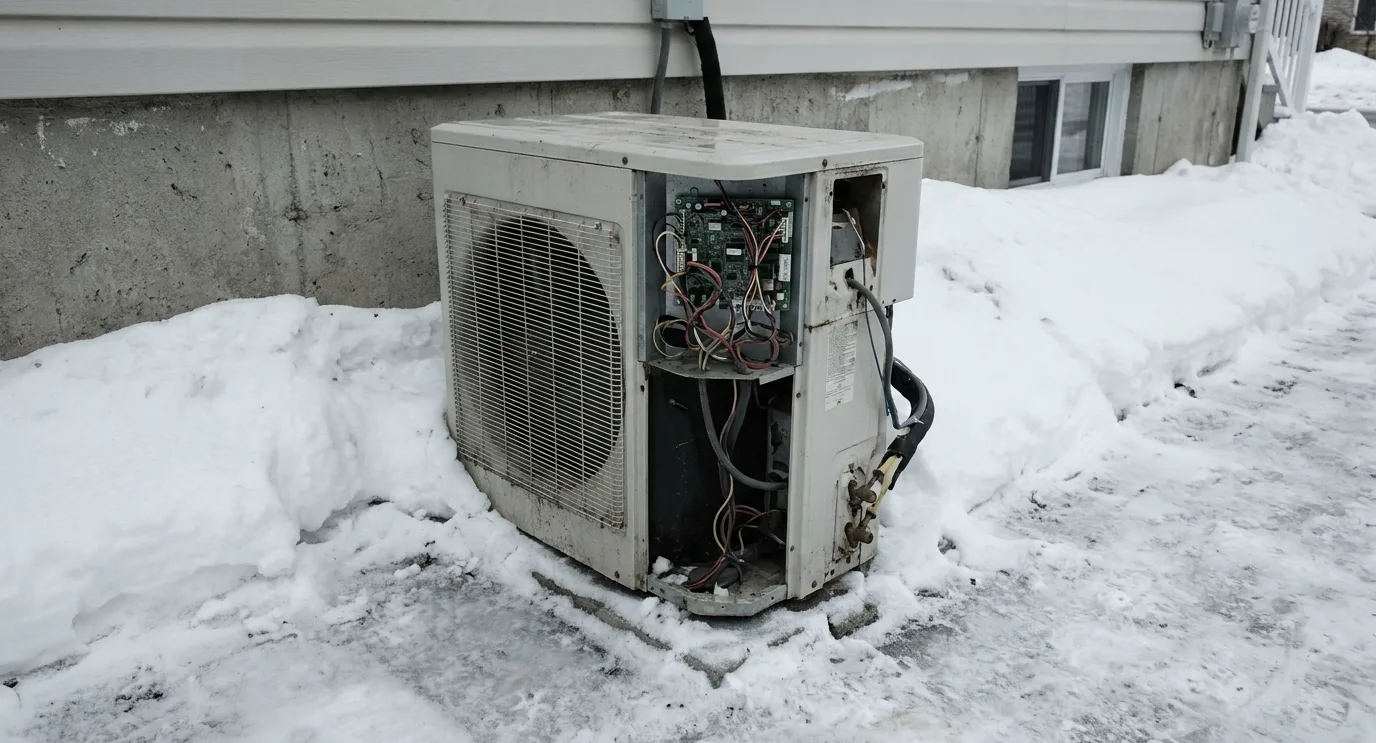
Warning Signs During Operation
- Outdoor coil stays covered in frost after defrost cycle ends
- System runs continuously yet indoor temperature stays flat
- Reversing valve clicks but mode does not change
- High-pressure switch trips during mild weather
- Loud hissing from the outdoor unit when switching modes
Common Heat Pump Failure Points
The reversing valve spool sticks when the solenoid coil loses voltage or the slide wears. Technicians energize the coil and listen for the shift while monitoring suction pressure. A valve that does not shift requires replacement of the entire valve body and new flare nuts or braze joints.
Defrost control boards lose the ability to read coil temperature. The board keeps the unit in cooling mode or skips defrost entirely. Replacement involves matching the new board to the unit wiring diagram and confirming the sensor resistance curve before reinstalling the access panel.
Measurements Taken on Site
Technicians attach gauges to the service ports and record suction, discharge, and liquid line pressures. They calculate superheat at the evaporator outlet and subcooling at the condenser outlet. Deviations outside manufacturer tables indicate low charge, a restricted metering device, or airflow loss across the coils.
Voltage is checked at the contactor, defrost board, and reversing valve coil. Amperage draw on the compressor and outdoor fan motor is compared to the nameplate rating. Ground faults or insulation breakdown on the compressor windings require compressor replacement rather than further electrical repairs.
Repair and Component Replacement
When the reversing valve fails, technicians recover refrigerant, cut the old valve body, and braze a new valve with nitrogen flowing through the lines to prevent oxidation. New filter driers are installed and the system is evacuated to 500 microns before recharging to the factory-specified weight.
Electronic expansion valves are swapped when the step motor fails to respond to the control signal. The new valve is calibrated through the board menu, and the system is run through both heating and cooling modes to confirm stable superheat tracking under varying load conditions.
First Actions for Homeowners
Turn the thermostat to off and open the outdoor disconnect to stop the compressor. Check that the outdoor coil is free of leaves or grass clippings that block airflow. Note whether the indoor blower continues to run and whether the auxiliary heat strips engage if the heat pump stops producing heat.
Record any error codes displayed on the thermostat or indoor unit board. These codes help our technicians select the correct test points before arrival. Do not attempt to adjust refrigerant levels or open service valves, as improper handling releases refrigerant and voids system integrity.
Heat Pump Repair questions
Why does my heat pump run but produce little heat?
Low refrigerant charge, a stuck reversing valve, or a failed defrost sensor prevents full heat transfer. Technicians measure pressures and coil temperatures to isolate the exact component before any repair. Correcting the root cause restores rated capacity without repeated service visits.
What parts are commonly replaced during Heat Pump Repair?
Reversing valves, defrost sensors, expansion valves, and contactors fail most often. Each replacement includes new gaskets or braze joints and a new filter drier. The system is then recharged to the exact factory weight listed on the unit data plate.
Can a homeowner clear a frozen outdoor coil safely?
Switch the system off and allow the coil to thaw naturally. Avoid using sharp tools or high-pressure water that can bend fins or damage the copper tubing. Once thawed, restore power only after confirming the drain pan and lines are clear of ice.
How does Cupe Mechanical HVAC confirm a repair fixed the issue?
After component replacement the system is run through both heating and cooling modes. Pressures, superheat, subcooling, and defrost cycle timing are recorded and compared to manufacturer specifications. The unit must meet these values before the service call is closed.
Arrange Heat Pump Repair
Contact Cupe Mechanical HVAC to schedule Heat Pump Repair across the USA and restore system operation.