
Commercial HVAC Service in the USA
Cupe Mechanical HVAC sends technicians to commercial buildings to evaluate rooftop units, chillers, and boilers. They connect manometers to measure total external static pressure and use combustion analyzers to read oxygen and carbon monoxide levels in flue gas. These readings show whether the heat exchanger is intact and whether the blower wheel is moving the designed cubic feet per minute. Technicians also record supply and return air temperatures to calculate delta T across the coil.
When delta T falls outside the expected range the technician checks refrigerant charge with superheat and subcooling calculations on DX systems or inspects water flow rates on chilled water loops. They examine actuator operation on dampers and VAV boxes to confirm each zone receives the correct air volume. All measurements are logged so the owner can see exactly which component needs attention before any repair begins. Refrigerant line insulation checks occur when technicians do commercial hvac service for Cupe Mechanical HVAC throughout the USA.
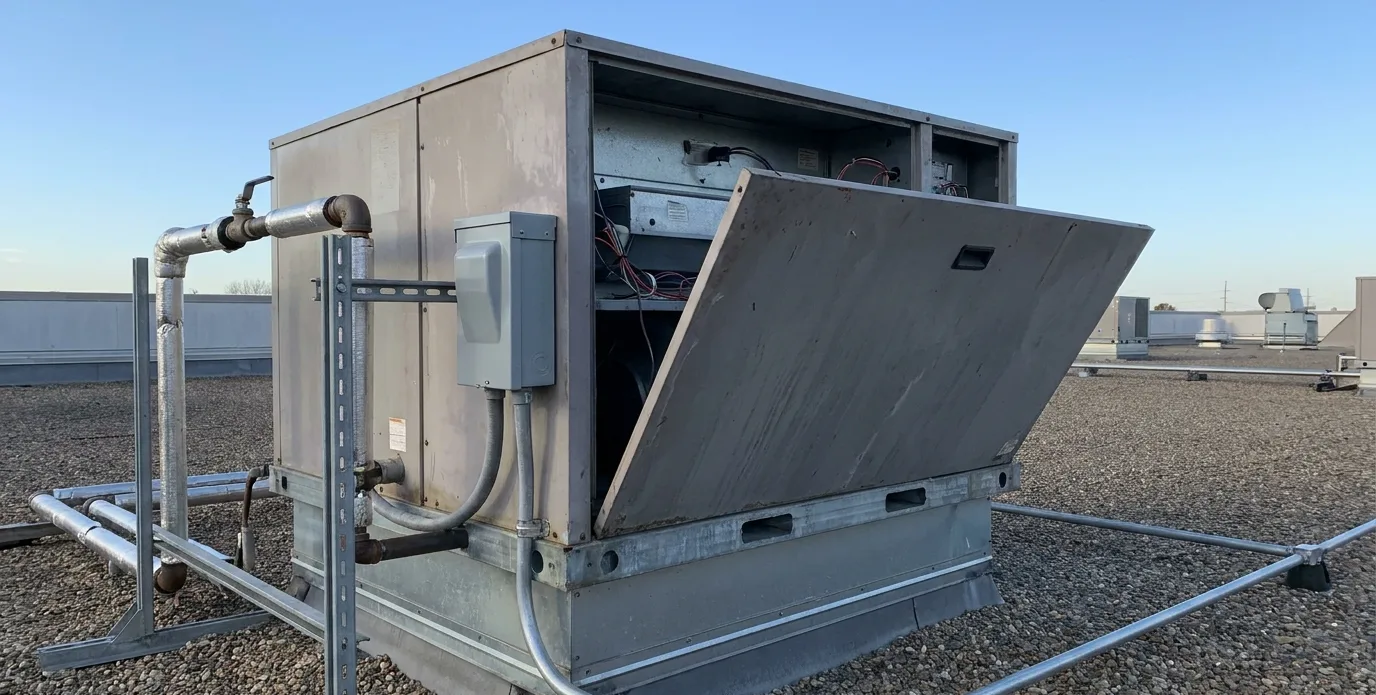
Observable Problems in Commercial Systems
- Supply air temperatures remain too warm during cooling calls.
- Multiple zones show temperature swings of more than five degrees.
- Blower motors cycle on and off within minutes of starting.
- Condensate drain lines back up and overflow onto ceilings.
- Gas pressure at the manifold drops below nameplate rating under load.
Measurements Taken on Every Commercial Call
Our technicians first record total external static pressure at the blower and compare it to the unit data plate. Elevated readings point to dirty filters, collapsed flex duct, or closed dampers downstream. They then measure amperage draw on the motor and compare it to full-load amperage to detect binding bearings or restricted airflow.
Next they perform a combustion analysis on any gas-fired equipment. The analyzer prints oxygen, carbon dioxide, and excess air values that reveal whether the burner is set for maximum efficiency. A separate test checks for carbon monoxide in the flue and in the mechanical room to confirm the heat exchanger has not cracked.
Typical Failure Points Found in the Field
Dirt accumulation on evaporator coils reduces heat transfer and forces the compressor to run longer cycles. Technicians remove panels and measure entering and leaving air temperatures to confirm the coil is the source of high suction pressure. They also inspect the condensate pan and drain line for sludge that can cause water damage above ceilings.
Actuator motors on VAV boxes and outside air dampers fail from continuous cycling. A failed actuator leaves a zone without proper airflow or allows unconditioned air to enter the system. Technicians test each actuator with a signal generator and replace only the motor or the entire assembly depending on the age of the unit.
Repair Steps and Component Replacement
When a blower wheel is out of balance the technician removes it, cleans the blades, and checks for bent fins. If the wheel cannot be restored it is replaced with an identical diameter and pitch wheel to maintain original airflow. The motor is also megger tested to verify winding insulation before reassembly.
Leaking refrigerant lines are located with an electronic detector and repaired by brazing new sections of copper. The system is then evacuated to 500 microns and recharged by weight according to the factory data plate. On water-source units technicians replace solenoid valves or expansion valves that no longer seat properly.
Parts and Materials Installed on Site
Replacement filters are selected to match the original MERV rating and frame size so pressure drop remains within design limits. Belts are replaced with matched sets that carry the correct horsepower rating. Gaskets on access panels are renewed whenever panels are removed to prevent air leakage.
Thermostatic expansion valves and reversing valves are stocked in common sizes for quick replacement. Control boards are matched to the existing model number so sequence of operation stays unchanged. All wiring connections are made with the same gauge and insulation type as the factory harness.
Commercial HVAC Service questions
What should a building owner check before calling for service?
Verify that thermostats are set correctly and that power is present at the disconnect. Note any error codes displayed on the unit controller and record which zones are affected. Replace the return air filter if it appears dirty and note the date the last filter change occurred.
How do technicians confirm a rooftop unit is moving the correct airflow?
They attach a manometer to measure total external static pressure and compare the value to the unit nameplate. Supply and return dry bulb temperatures are taken to calculate actual capacity. Motor amperage is checked against rated load to confirm the blower is not overloaded.
What parts are typically replaced during a commercial visit?
Technicians carry actuators, belts, filters, and expansion valves that match common commercial equipment. They also stock ignition modules, pressure switches, and contactors. Replacement parts are selected to match the original specifications so the system returns to design performance.
Can owners perform any maintenance before a technician arrives?
Owners can safely replace accessible air filters and confirm that condensate drains are clear of debris. They should avoid opening electrical panels or adjusting gas valves. Documenting the sequence of events leading to the problem helps the technician locate the fault faster.
Request Commercial HVAC Service
Call Cupe Mechanical HVAC so our technicians can measure pressures and temperatures on your commercial equipment and restore proper operation.