
Ductwork Installation in the USA
Cupe Mechanical HVAC installs duct systems that move conditioned air from furnaces boilers and heat pumps to every room. Our technicians calculate required duct diameter based on equipment tonnage and room loads then lay out trunks and branches with minimal turns. Proper sizing prevents high static pressure that reduces blower performance and creates uneven temperatures.
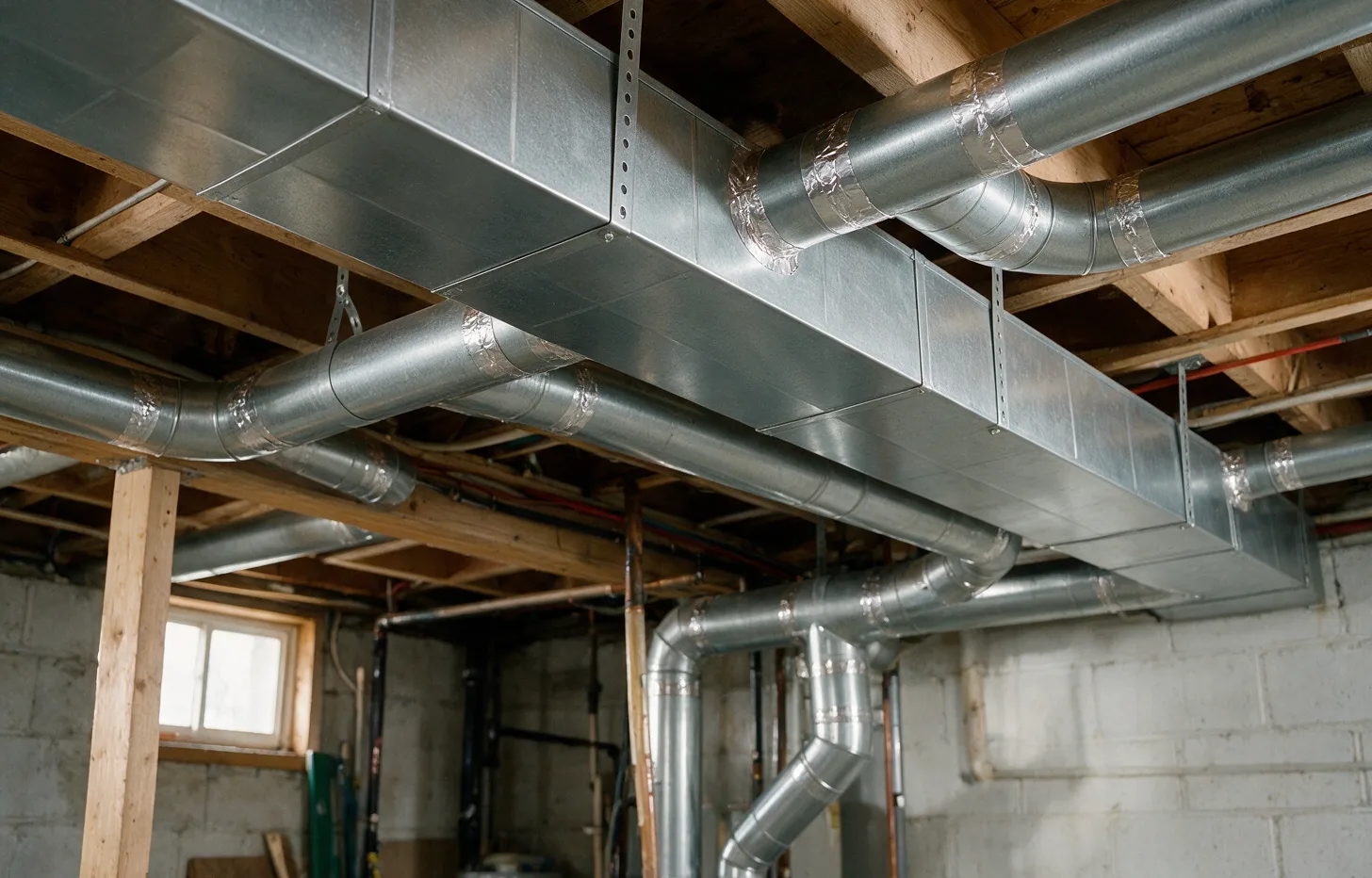
New duct runs use galvanized steel mains with mastic sealed joints and R-8 insulated flex connections at registers. We support both new construction and existing homes where old ducts leak or restrict flow. Installation includes supply and return paths plus balancing dampers set after startup. Boiler low water cutoff switches are tested during ductwork installation handled under Cupe Mechanical HVAC across the USA.
Warning Signs Ductwork Needs Replacement
- High utility bills with weak airflow from registers
- Visible gaps or disconnected sections in attic ducts
- Excessive dust on furniture despite clean filters
- Rooms that stay warmer or cooler than thermostat setting
- Blower motor runs hot or trips on high static pressure
Common Causes of Duct Failure
Undersized return ducts create negative pressure that pulls unconditioned air through leaks. Over time this pulls insulation fibers and construction dust into the system and reduces heat exchanger life. Our technicians trace these issues to original installation that never matched the final equipment capacity.
Corrosion at joints and crushed flex runs near attic insulation restrict velocity. Temperature swings cause metal expansion that opens seams sealed only with tape. Heat pump systems suffer most because reversing valves cycle the coil temperature and loosen connections faster than straight cooling setups.
Inspection and Measurement Process
Technicians start with a static pressure reading across the blower and again at the furthest register. They calculate total external static against manufacturer limits then use a ductulator to confirm required cross section. Smoke pencils reveal leakage points while thermal imaging shows insulation voids.
We count and measure every supply and return opening then compare actual cubic feet per minute against design values. Register face velocity is checked with a hot wire anemometer. These numbers guide whether to seal existing runs or replace the trunk entirely with new sheet metal.
Filter access and plenum condition receive equal attention. Restricted filters raise pressure drop and mask duct problems until the motor fails. Our crews note these findings before presenting material options.
Installation Options and Routing
Full trunk replacement uses snap lock pipe with drive cleats and mastic at every joint. We route mains along the shortest path that maintains eight inch minimum clearance from roof deck for insulation. Return air is sized at least as large as the supply to keep the system balanced.
Where ceiling height limits rigid pipe we install lined rectangular duct or insulated flex only on short final runs. Balancing dampers are placed in each branch before drywall. Startup includes total airflow verification and individual register adjustment with a flow hood.
Materials and Homeowner First Steps
Galvanized steel provides the longest service life for main trunks. We use R-8 faced insulation on all new runs and seal every seam with fiber reinforced mastic rather than tape. Flex connectors receive metal worm clamps at both ends to prevent pull off during service.
Before calling replace the air filter and confirm all supply and return registers are fully open. Walk the attic or crawlspace with a flashlight and note any visible separations or crushed sections. Record room temperatures at the same time each day for three days so our technicians can compare against post installation readings.
Ductwork Installation questions
How long does Ductwork Installation take?
Most residential trunk and branch replacements finish in two days once the layout is confirmed. Larger homes or commercial spaces may require three days to allow for pressure testing and final balancing after all connections are sealed.
Can existing ducts be sealed instead of replaced?
Mastic sealing works when the sheet metal remains sound and only seams leak. Crushed flex runs or undersized trunks still require replacement because sealing cannot restore lost cross section or correct velocity problems.
What insulation thickness is used on new ducts?
We wrap all supply and return runs with R-8 faced fiberglass. Attic installations receive an extra vapor barrier layer to prevent condensation when the system runs in cooling mode during humid months.
Will new ductwork change my energy bills?
Tighter joints and correct sizing reduce blower watt draw and prevent conditioned air loss into unconditioned spaces. Actual savings depend on how leaky the previous system was and how well the rest of the building envelope is sealed.
Schedule Ductwork Installation
Contact Cupe Mechanical HVAC to measure your current static pressure and plan new duct routing.