
Boiler Repair in the USA
Cupe Mechanical HVAC sends technicians to evaluate boiler systems that fail to maintain temperature or show pressure drops. They measure static pressure on the gauge, check the expansion tank charge, and inspect the circulator pump amperage draw before any disassembly. Sediment in the heat exchanger or a stuck zone valve often reduces flow and triggers short cycling on the aquastat.
Technicians trace supply and return piping for corrosion or air pockets that block circulation. They test the low water cutoff and relief valve operation with a bucket to confirm discharge. When the burner fires but flue gas temperature runs high, the exchanger requires cleaning to restore heat transfer rates. Checking blower motors and capacitor values forms part of boiler repair from Cupe Mechanical HVAC in the USA.
Warning Signs of Boiler Trouble
- Pressure gauge reads below twelve pounds during heat call.
- Radiators stay cool at the top while the boiler runs.
- Burner shuts down before the thermostat reaches setpoint.
- Visible water stains appear at pipe joints or near the unit.
- Banging or gurgling sounds come from the supply piping.
Pressure and Circulation Checks
Technicians connect a manifold gauge set to the boiler supply and return ports to record differential pressure across the circulator. They measure flow rate by timing how long the pump takes to move a known volume through a drain valve. Air in the system shows up as fluctuating readings and requires bleeding at each radiator vent.
Expansion tank pressure is checked with a tire gauge after the boiler is isolated and drained to ten pounds. A waterlogged tank fails to cushion thermal expansion and causes relief valve discharge. Replacement uses a tank sized to the system volume and precharged to the cold fill pressure.
Burner and Combustion Inspection
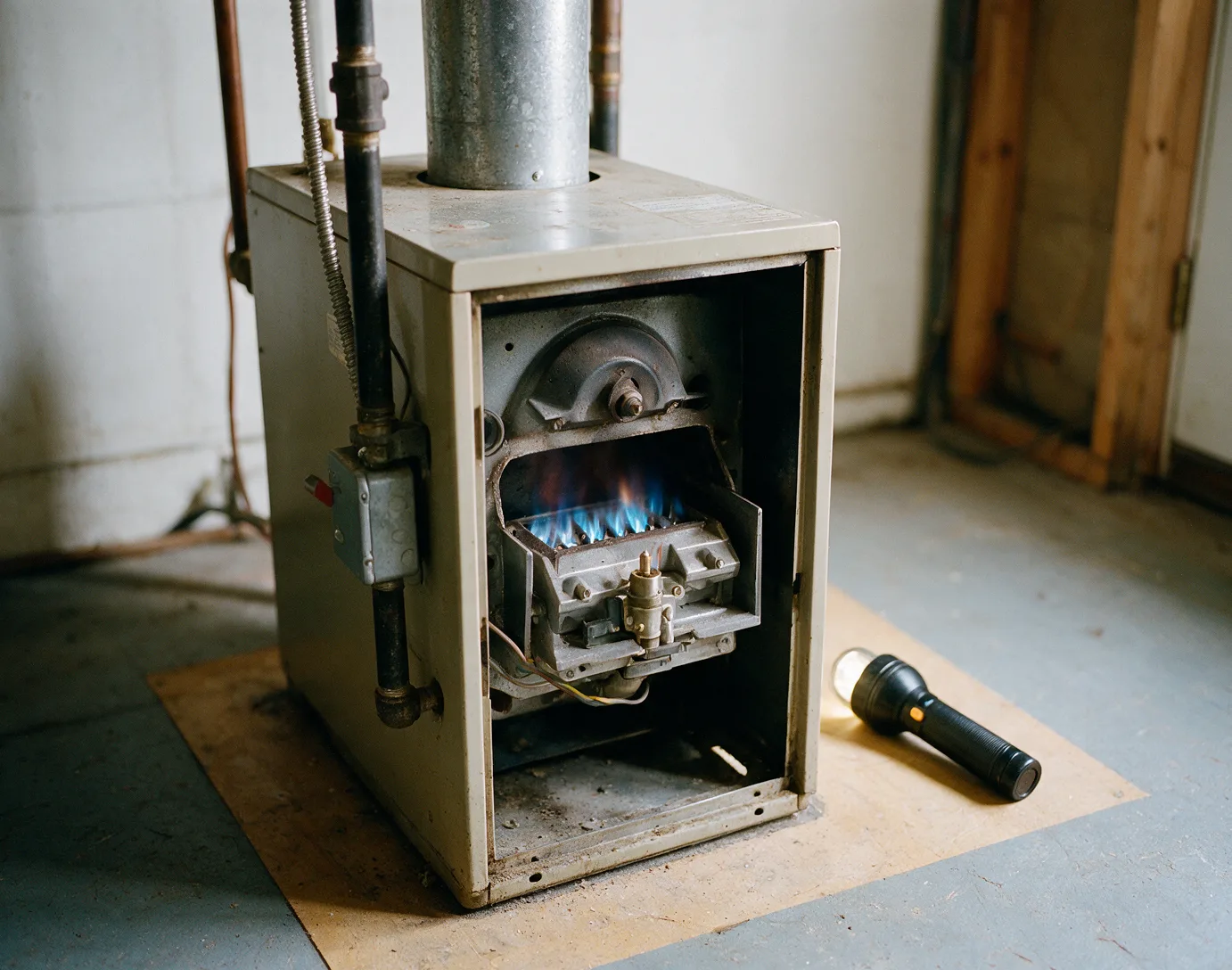
Our technicians remove the burner assembly and vacuum soot from the heat exchanger tubes and flue passages. They check electrode gap and porcelain condition on gas units or nozzle spray pattern on oil units. A combustion analyzer measures oxygen, carbon monoxide, and stack temperature to verify proper air fuel ratio.
Ignition transformer output and flame safeguard timing are tested with a multimeter and stopwatch. Delayed ignition or flame rollout points to blocked orifices or a weak draft. Technicians replace gaskets and adjust the primary air shutter before reassembling the burner.
Piping and Valve Repairs
Leaking threaded joints are cut out and replaced with new black iron or copper sections using thread sealant rated for hydronic systems. Zone valves are tested for end switch continuity and actuator motor draw. Stuck valves are replaced with sweat or threaded models matched to pipe size and Cv rating.
Technicians install isolation valves on supply and return lines during repair so the boiler can be serviced without draining the entire loop. They flush the system with a cleaner to remove rust and scale before refilling and adding corrosion inhibitor to the correct concentration.
Replacement Options for Older Units
When the heat exchanger shows cracks or the jacket insulation is missing, technicians recommend a new boiler sized by heat loss calculation rather than matching the old input rating. They compare cast iron sectional, steel fire tube, and high efficiency condensing models for the existing radiation and piping layout.
New units require updated venting materials, condensate drains on condensing models, and possibly larger circulators to match lower return water temperatures. Technicians adapt existing piping with new flanges and dielectric unions to prevent future corrosion at transitions.
Boiler Repair questions
Why does my boiler lose pressure overnight?
A gradual pressure drop usually comes from a leaking relief valve, an automatic fill valve stuck open then closed, or a pinhole leak in the boiler sections or near the circulator flanges. Technicians isolate the boiler and pressure test the loop to locate the source before any repair.
What causes the burner to short cycle?
Short cycling occurs when flow drops from a failed circulator, air locked zones, or a clogged strainer. It can also come from an oversized nozzle or low gas pressure that trips the high limit before the thermostat is satisfied. Measurement of flow and temperature rise identifies the exact cause.
Can I bleed the radiators myself?
Homeowners can open the manual vents at each radiator with a key or flat screwdriver while the pump runs and the boiler is at low pressure. Keep a pan ready for water and close the vent once steady flow appears. Do not attempt electrical or gas adjustments.
When should the expansion tank be replaced?
Replace the tank when it holds water instead of air, confirmed by draining the boiler and tapping the tank or checking pressure at the Schrader valve. A waterlogged tank forces the relief valve to open on every heat cycle and stresses the boiler sections.
Schedule Boiler Repair
Contact Cupe Mechanical HVAC for Boiler Repair on gas or oil systems across the USA.