
AC Repair in the USA
Cupe Mechanical HVAC sends technicians to locate why an air conditioner stops cooling. They measure suction and discharge pressures, amp draw on the compressor and condenser fan motor, and temperature split across the evaporator coil. Low refrigerant, dirty coils or a failing capacitor each produce distinct pressure and temperature readings that guide the next step.
Homeowners first turn off the thermostat and reset the breaker if it has tripped. Next they replace the air filter if it is clogged with dust. These two actions clear simple restrictions before our technicians arrive with gauges, a multimeter and replacement parts sized for the unit tonnage. Airflow balance across supply registers gets verified in every ac repair completed by Cupe Mechanical HVAC serving the USA.
Warning Signs During Cooling Operation
- Air from vents stays at room temperature after thirty minutes
- Compressor starts then stops within seconds on every cycle
- Ice forms on the suction line near the outdoor unit
- High-pitched whine comes from the condenser fan motor
- Indoor humidity stays above sixty percent during operation
Refrigerant Circuit Diagnosis
Our technicians attach manifold gauges to the service ports and compare measured pressures against the temperature-pressure chart for the refrigerant type. A pressure drop indicates a leak at flare fittings, Schrader valves or coil u-bends. They then use an electronic leak detector and nitrogen to isolate the exact location before any recovery or repair begins.
Once the leak is found they recover the remaining refrigerant, repair the joint or replace the coil section, pressure test the circuit, evacuate to below five hundred microns and recharge by weight according to the nameplate. Short-cycling from low charge is eliminated only after the system holds the correct amount of refrigerant and oil.
Electrical Component Testing
Technicians measure line voltage at the disconnect, then check run and start windings with a multimeter. A capacitor that reads outside plus or minus ten percent of its microfarad rating is replaced with an exact match. They also test the contactor for pitted points and measure the compressor locked-rotor amps against the rated value to confirm the motor is not failing.
Wiring insulation is inspected for heat damage where it enters the control box. Loose spade connections on the defrost board or thermostat wire are tightened. These steps restore reliable starts without repeated breaker trips or burned contactor coils.
Airflow and Coil Condition
Static pressure is measured across the evaporator coil and blower. Restricted airflow from dirty fins or collapsed duct liner raises head pressure and lowers suction pressure. Technicians clean both coils with non-acidic solution and verify the blower wheel is free of debris before recording final temperature split and amp draw.
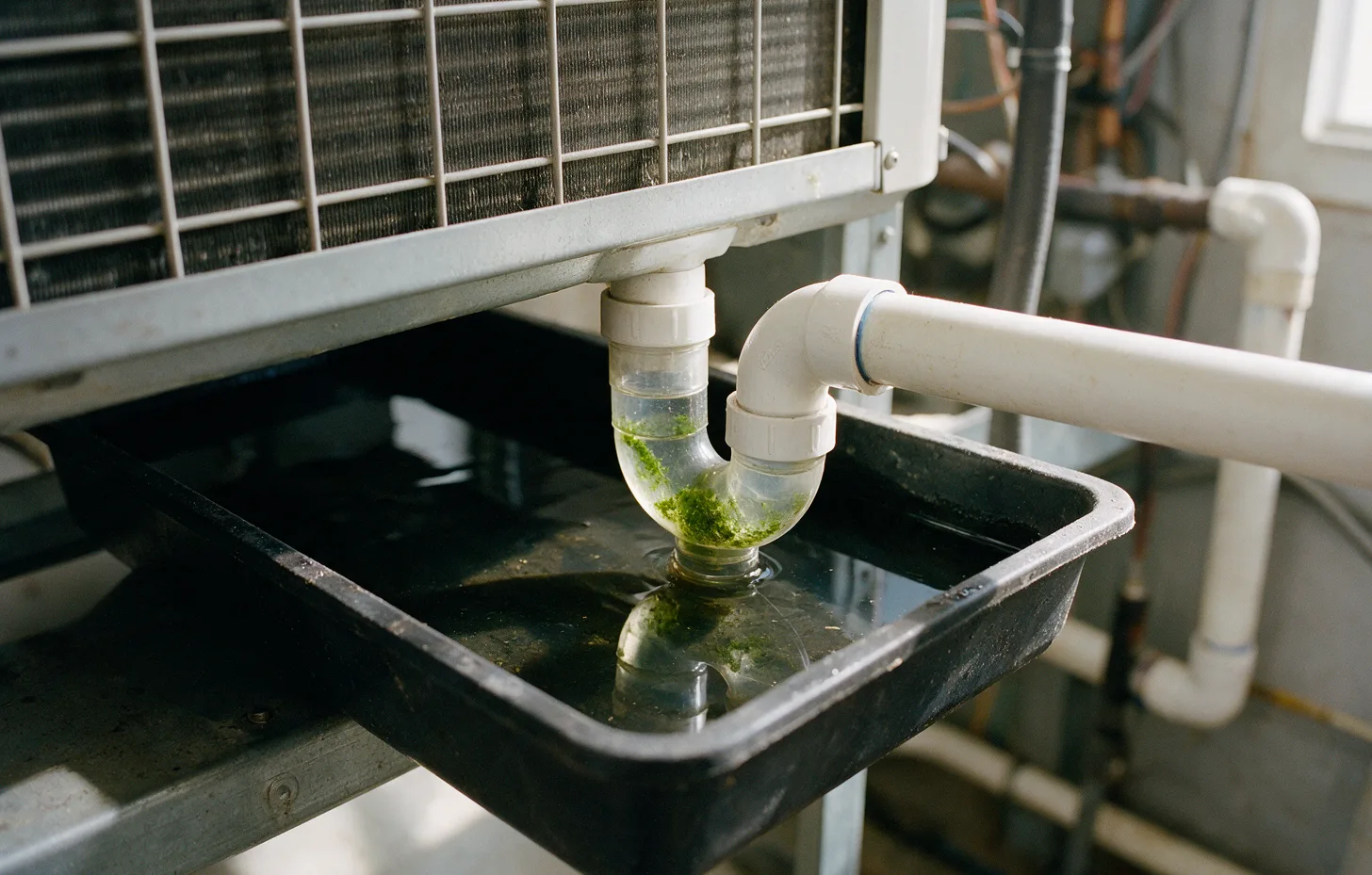
They also confirm the condensate drain flows freely and the float switch shuts the unit down if water backs up. Proper drainage prevents water damage and keeps the coil from icing over during low-load conditions.
Repair Versus Component Replacement
When the compressor fails electrically or mechanically, technicians present the option of compressor replacement or full outdoor unit change-out. New units come with matched coils and updated refrigerants. Existing ductwork and line sets are pressure tested and flushed before reuse to avoid oil or moisture contamination in the new system.
Minor repairs such as fan motor swaps or TXV replacement are completed on site with factory-specified parts. All recovered refrigerant is handled according to EPA Section 608 requirements and the system is returned to factory charge and airflow settings.
AC Repair questions
What causes an AC unit to stop cooling suddenly?
Sudden loss of cooling usually traces to a tripped breaker, failed capacitor, low refrigerant from a leak or a clogged condensate switch. Technicians measure voltage, capacitance and pressures first to identify which component stopped the refrigeration cycle.
Can a homeowner check anything before technicians arrive?
Replace the return-air filter and confirm the thermostat is set to cool with the fan on auto. Note whether the outdoor fan spins and whether any unusual noises occur. These observations help narrow the diagnosis once gauges are attached.
How do technicians locate a refrigerant leak?
They attach gauges to read suction and liquid pressures, then use an electronic sniffer or soap solution around joints and coils. Nitrogen pressurization makes small leaks audible or visible before the circuit is opened for repair.
What parts are commonly replaced during AC Repair?
Common replacements include dual-run capacitors, contactors, condenser fan motors and TXV or orifice metering devices. Each part is matched to the unit model and tonnage so the system returns to design pressures and airflow.
Request AC Repair
Cupe Mechanical HVAC dispatches technicians equipped to measure pressures, amp draw and temperature split on any residential AC system.