
Furnace Repair in the USA
Cupe Mechanical HVAC sends technicians to residential sites nationwide for Furnace Repair. They focus on gas furnaces that use burners to heat air pushed through ducts by the blower. A cracked heat exchanger or weak draft inducer motor often stops safe combustion and triggers shutdown. Our crews carry replacement valves, sensors, and motors sized for common furnace models.
Technicians start by verifying thermostat calls for heat and checking 120-volt supply to the control board. They measure manifold gas pressure against the rating plate and observe flame color and shape on each burner. Dirty orifices raise carbon monoxide risk while a failed pressure switch prevents ignition. Replacement parts include silicon nitride igniters and flame rollout switches. Technicians inspect burners and heat exchangers during furnace repair provided by Cupe Mechanical HVAC throughout the USA.
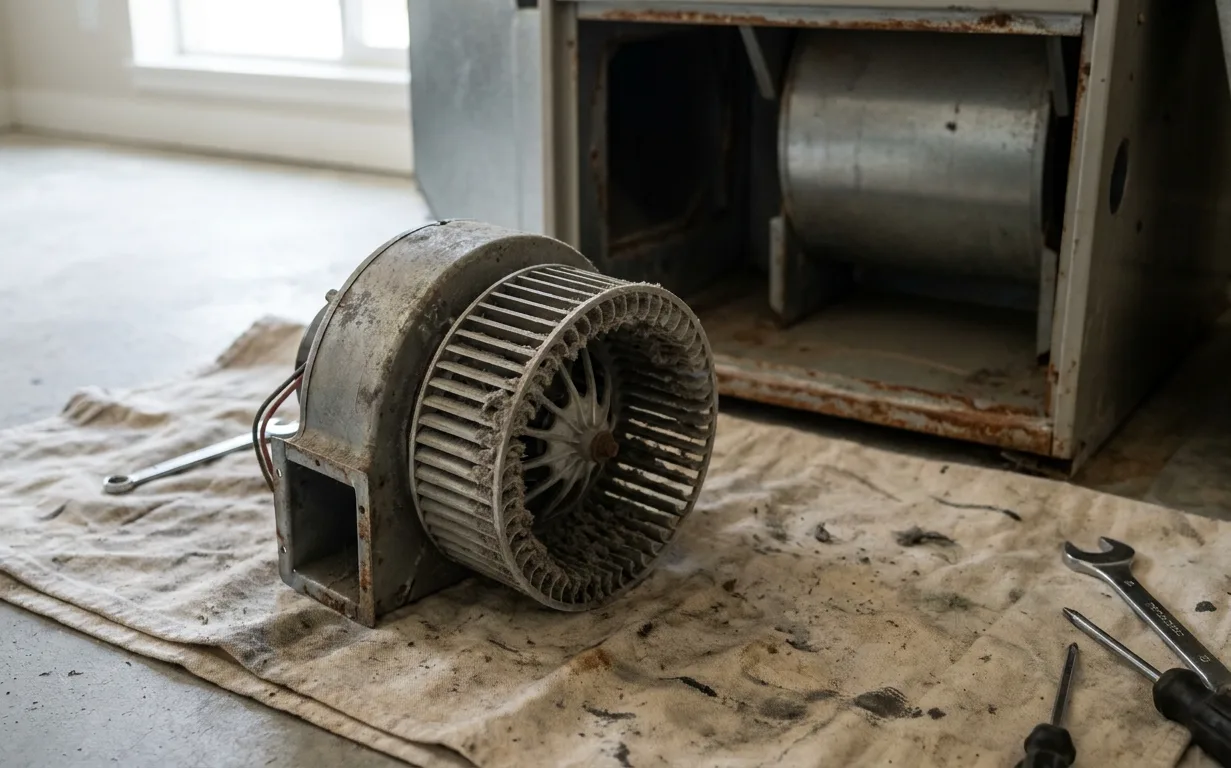
Common Furnace Problems
- Furnace starts then shuts off after a few minutes of operation
- Burner flames lift off the ports or show yellow tips
- Blower runs continuously without satisfying the thermostat
- Metallic scraping noise comes from the blower compartment
- House shows higher utility bills with uneven room temperatures
Furnace Component Failures
A faulty gas valve fails to open fully and starves the burners of fuel. Technicians test inlet and outlet pressures with a manometer to confirm valve function before replacement. They also check the ignition sequence timing on the control board.
The limit switch opens when the heat exchanger overheats. Technicians measure temperature rise across the exchanger and compare it to the manufacturer's specification. Excessive rise points to low airflow from a dirty filter or weak capacitor on the blower motor.
Inspection Measurements
Our technicians attach a combustion analyzer to the flue to record oxygen, carbon monoxide, and stack temperature. Readings outside acceptable ranges indicate incomplete combustion or venting restrictions. They also verify the draft inducer creates the required negative pressure on the pressure switch.
Visual checks include the condition of the flame sensor rod and the alignment of the burner assembly. Carbon buildup on the rod interrupts the microamp signal and stops the valve from staying open. Technicians clean or replace the rod and measure flame current with a multimeter.
Repair and Replacement Choices
Minor repairs replace the igniter, flame sensor, or capacitor while the furnace remains in place. When the heat exchanger shows cracks, technicians recommend furnace replacement because repair voids safety listings. New units arrive with matching blower motors and variable-speed drives for better airflow control.
Duct connections are inspected for gaps that pull cold air into the return. Technicians seal joints with mastic and add insulation where runs pass through unconditioned spaces. Proper sealing keeps the furnace from short-cycling on cold air infiltration.
Initial Homeowner Checks
Homeowners should first replace the air filter if it appears gray or clogged. A restricted filter reduces airflow, raises heat exchanger temperature, and trips the limit switch. Use the same size filter rated for the furnace airflow in cubic feet per minute.
Next, confirm the thermostat is set to heat mode and the fan switch is on auto. Reset the furnace power switch for one minute to clear a temporary lockout. If the unit still fails to ignite after these steps, call Cupe Mechanical HVAC for component testing.
Furnace Repair questions
What causes a furnace to short cycle?
Short cycling occurs when the limit switch opens from high heat exchanger temperature. Low airflow from a dirty filter or weak blower motor is the most common cause. Technicians measure temperature rise and capacitor values to identify the restriction.
How do technicians test the heat exchanger?
They use a combustion analyzer to detect elevated carbon monoxide in the flue and inspect the exchanger with a mirror and flashlight for visible cracks. A failed exchanger requires furnace replacement for code compliance.
What parts are commonly replaced during Furnace Repair?
Common replacements include the hot surface igniter, flame sensor rod, draft inducer motor, and gas valve. Technicians stock these parts on the truck and match them to the furnace model number before installation.
Can a homeowner adjust gas pressure?
No. Gas pressure adjustment requires a manometer and knowledge of the manifold rating plate. Incorrect pressure creates carbon monoxide or burner flashback. Only trained technicians perform this measurement and adjustment.
Arrange Furnace Repair
Contact Cupe Mechanical HVAC to inspect burners, heat exchanger, and blower assembly on your furnace.